

Endodontic treatment is a procedure that requires precision, control and good clinical documentation. After root canal treatment has been completed, one of the important challenges is the later quick and unambiguous identification of root canal orifices — especially during follow-up visits, re-diagnosis, restorative treatment or when secondary caries is suspected.
This is why various methods of marking and securing canal orifices are used in clinical practice. One of them is the consistent use of colours as an element of visual information. Colour can help orientation, organise clinical documentation and support communication between dentists.
For this type of marking, a coloured flowable material can be used, such as FLOW-COLOR, which allows different clinical situations after endodontic treatment to be clearly marked.
Why mark canal orifices?
Marking canal orifices after endodontic treatment may serve several practical purposes. First of all, it makes it easier to locate the canal later if the tooth requires follow-up, restoration or reassessment. This is particularly important when the tooth anatomy is difficult, the canals are positioned atypically or the previous treatment did not follow a standard course.
Another important aspect is securing the canal orifices. After endodontic treatment, the area of the chamber floor and the canal entrances should be clear and properly protected, as future intervention may be required. Clear marking makes it easier for the dentist to assess the clinical situation and quickly understand the type of case they are dealing with.
Coloured marking may also serve as additional diagnostic information. If a given colour is consistently assigned to a specific type of clinical situation, the dentist receives a simple visual signal regarding the course or outcome of the previous treatment.
Colour as an element of clinical documentation
In dentistry, documentation is mainly associated with notes in the patient’s record, X-rays, photographic documentation or the treatment plan. However, in certain procedures, information left directly in the treatment field may also be important.
In the case of endodontic treatment, such an element may be colour-coded marking of canal orifices. It does not replace medical documentation, but it can complement it. As a result, during the next visit, the dentist can more quickly recognise whether the canal was treated correctly or whether the case requires special attention.
This approach is particularly useful in clinics where a patient may be treated by more than one dentist. Clear marking facilitates communication within the team, reduces the risk of misunderstandings and helps maintain a consistent standard of procedure.
Standard for marking canal orifices
In practice, a fixed colour-coding scheme can be adopted, in which a specific colour corresponds to a specific clinical situation. Consistency is the most important factor — the same colour should always indicate the same type of case.
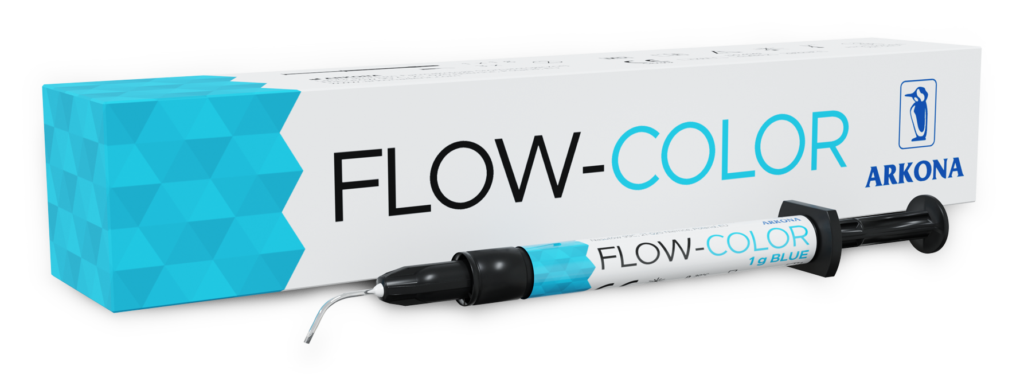
FLOW-COLOR BLUE — correct treatment
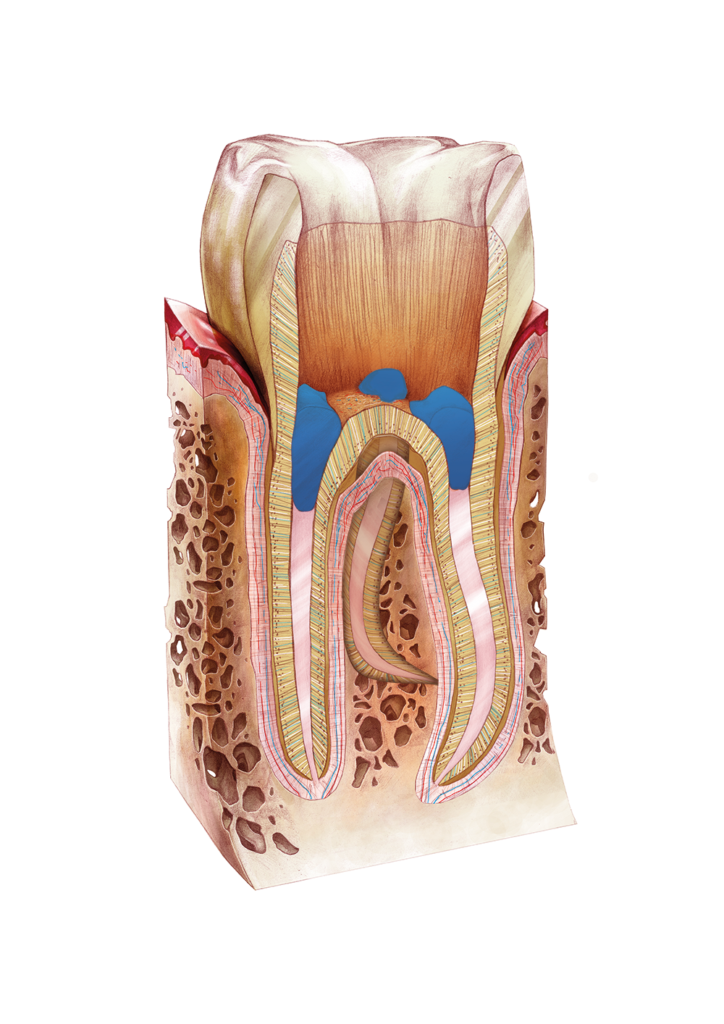
BLUE is used to mark a canal that has been filled correctly, regardless of its shape, length, position in the tooth or the material used for filling.
This means that the canal has been prepared and filled in a way that allows the treatment outcome to be considered correct. The blue colour therefore becomes information that the given canal does not require any special warning marking.
FLOW-COLOR GREEN — blocked or underfilled canal
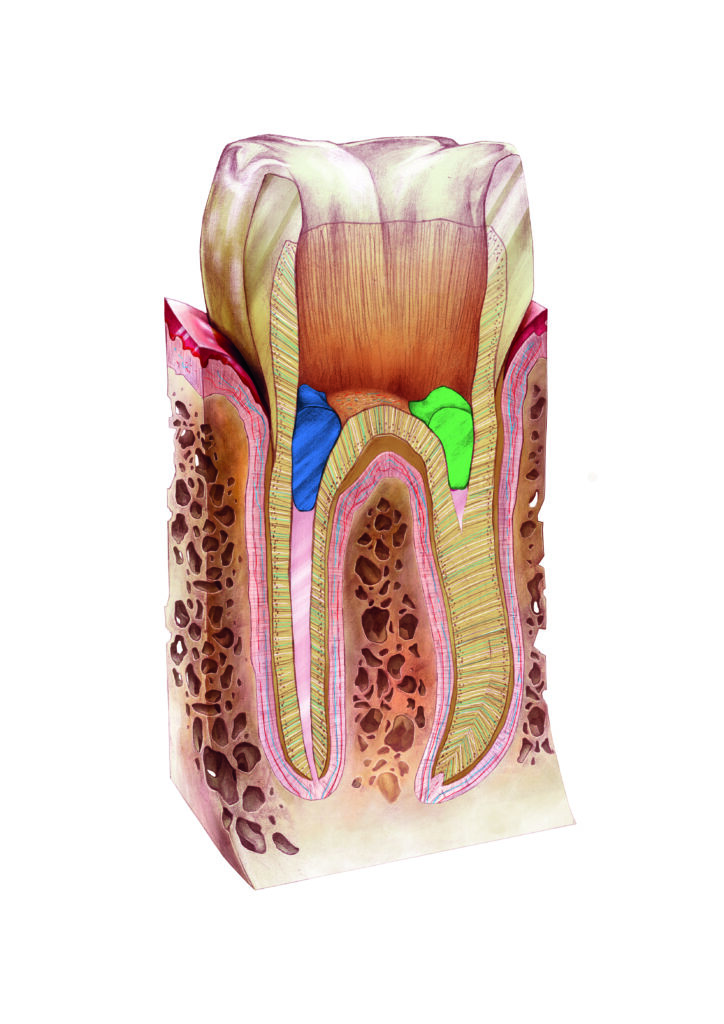
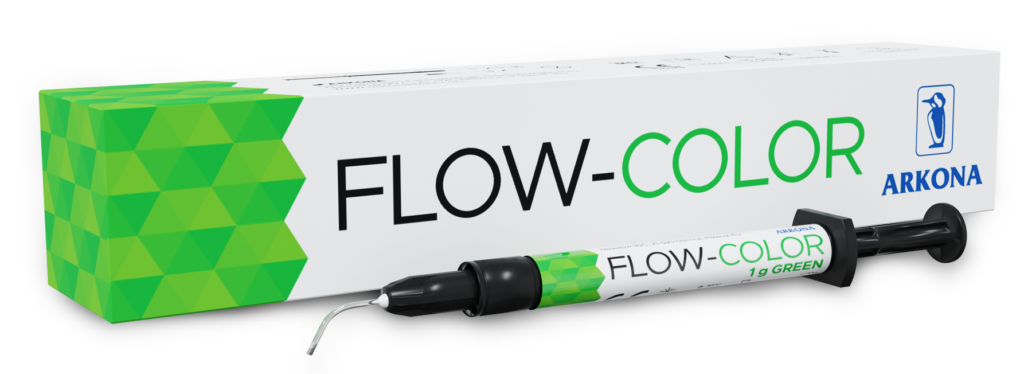
GREEN can be used to mark a blocked or underfilled canal. This indicates that the treatment did not follow a fully standard course and that this canal may require special diagnostic attention in the future.
Such marking may help the dentist during follow-up, planning further treatment or analysing a radiograph in combination with the clinical image.
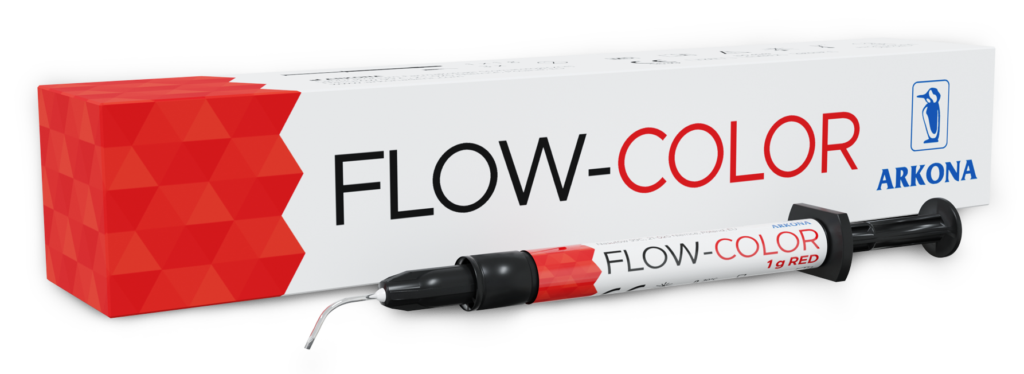
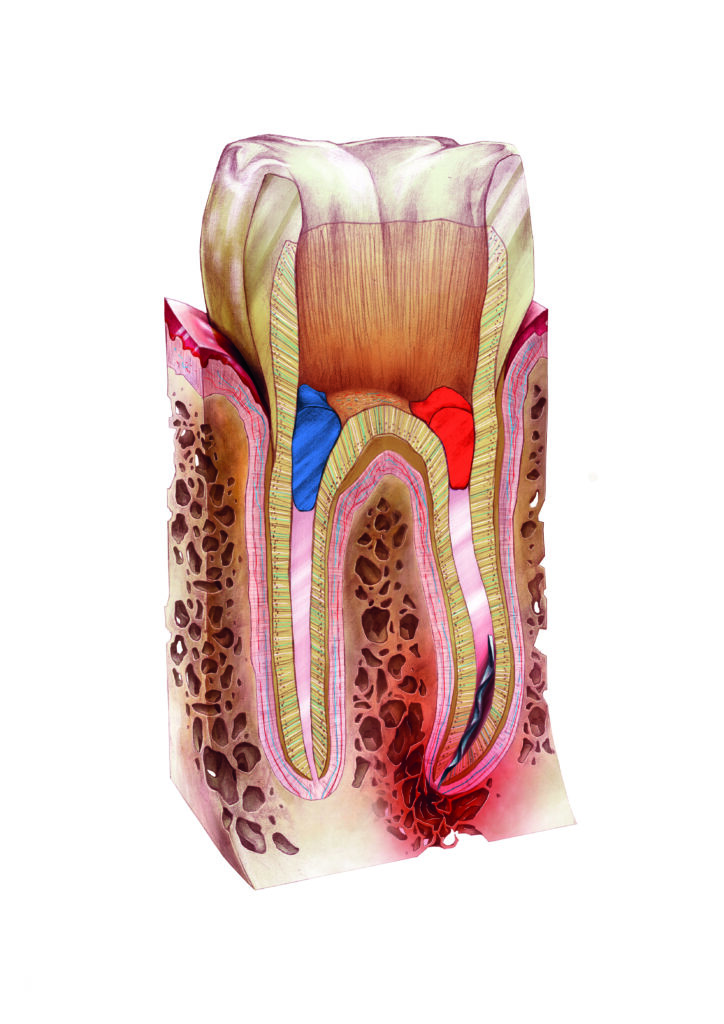
FLOW-COLOR RED — broken instrument or perforation
RED can be used in situations requiring particular caution, such as a broken instrument in the canal or a perforation.
It is a clear warning signal. Thanks to this, the dentist who assesses the tooth in the future receives information already at the clinical stage that a complication or non-standard situation occurred in that area.
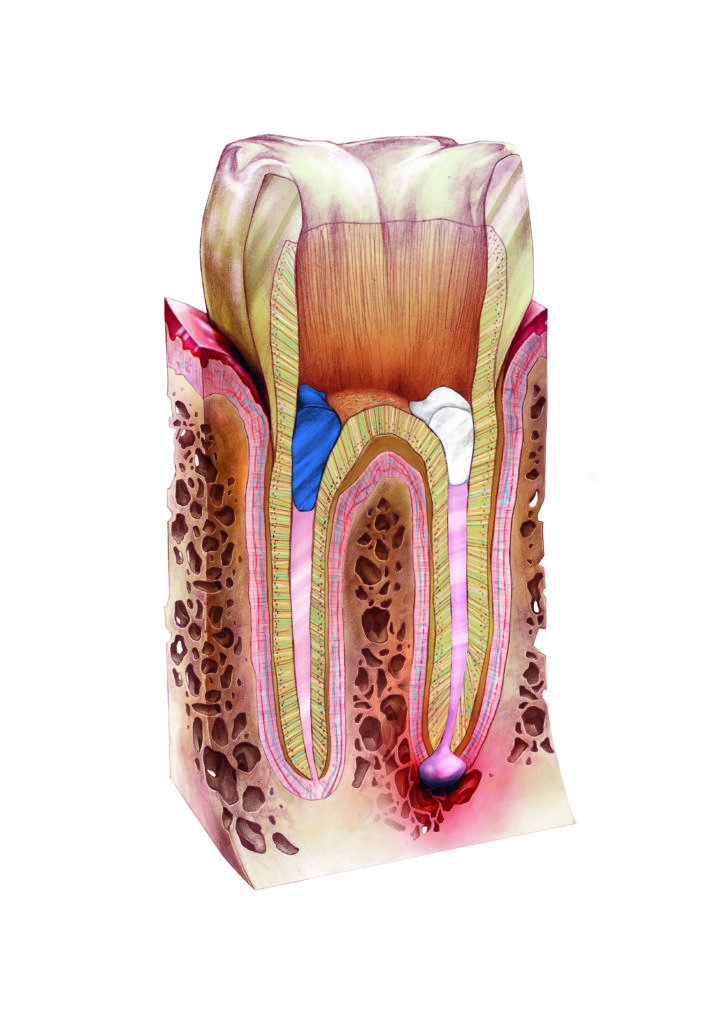
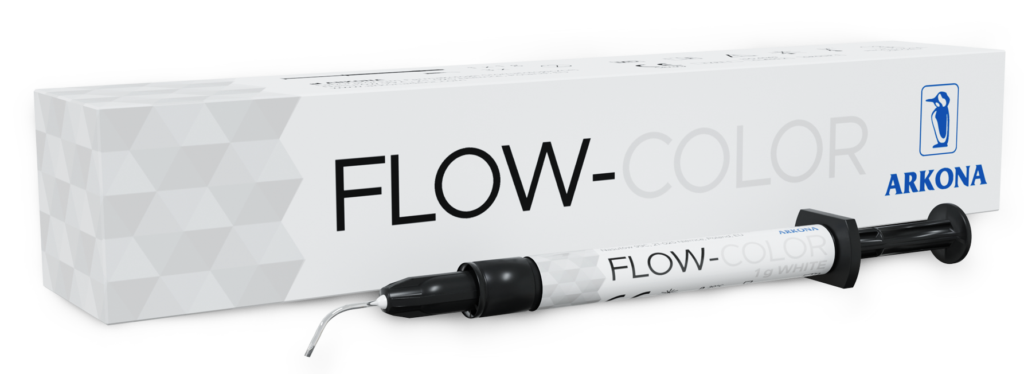
FLOW-COLOR WHITE — overfilled canal
WHITE can be used to indicate an overfilled canal. In this case, the colour information shows that the treatment outcome requires observation or further analysis in the future.
In combination with radiographic documentation, such marking may facilitate assessment of the case during subsequent follow-up visits.
Correct treatment and conditional treatment
Not every endodontic treatment ends in an unequivocally ideal situation. In clinical practice, difficult cases occur, including blocked canals, underfilled canals, overfills, broken instruments or perforations. Sometimes the treatment outcome may be described as conditional, especially when there is diagnostic uncertainty or a chronic asymptomatic lesion.
In such situations, consistent marking of canal orifices may be particularly helpful. Colour is not merely an aesthetic detail — it can become an element that organises clinical information.
Thanks to this, the dentist knows which canals have been treated correctly and which require increased attention during further observation. This is especially important in long-term treatment, where the patient returns after several months or years and the full clinical picture requires a combination of documentation, X-rays and direct assessment.
Why is consistency key?
Colour itself has no meaning if it is not part of an established system. Only consistent assignment of colours to specific clinical situations makes the marking clear.
If, in one case, blue means correct treatment and, in another, it is just a random layer of material, the system stops working. That is why it is important for the clinic or clinical team to use a uniform scheme and document its meaning.
Consistency in marking can facilitate:
- later diagnostics,
- treatment follow-up,
- assessment of difficult cases,
- planning of possible retreatment,
- securing clinical information directly within the tooth.
A small detail with significant diagnostic value
Marking canal orifices after endodontic treatment is an example of a procedure in which a small detail may have great importance in the future. Colour used in the right place and according to an established standard can help achieve faster clinical orientation, especially in difficult or multi-stage cases.
FLOW-COLOR BLUE, GREEN, WHITE and RED allow such a marking system to be introduced in a clear and practical way. Thanks to different colours, the dentist can not only mark canal orifices, but also secure information about the course of treatment directly within the tooth.
Such marking does not replace full medical documentation, but it can support it. It is additional information that remains visible during clinical work and may help the dentist make the right diagnostic decision.
Summary
Marking and securing canal orifices after endodontic treatment may support later diagnostics, follow-up and communication within the team. Consistent use of colours helps organise information about the course of treatment and draw attention to cases requiring special observation.
*FLOW-COLOR in BLUE, GREEN, WHITE and RED makes it possible to create a clear system for marking canal orifices after endodontic treatment:
- BLUE — correctly filled canal,
- GREEN — blocked or underfilled canal,
- RED — broken instrument or perforation,
- WHITE — overfilled canal.
In endodontics, precision does not end with the preparation and filling of the canal itself. What remains after treatment is also important: clear clinical information, protection of structures and the possibility of quickly assessing the situation during subsequent visits.
*The standard for marking canal orifices was developed in cooperation with specialists from the Department of Conservative Dentistry at the Medical University of Warsaw.
